


Nature is capable of creating incredibly complex systems from simple, recurring principles.
What we now call modularity has been used by nature for millions of years.
In his talk, Stanislav Martinec will trace the history of modularity from the natural world to the present day. He will show that the principles of assembly, repetition, combination and adaptation are no longer the sole preserve of the construction industry. Modularity is making its way into the energy sector, agriculture, technology, manufacturing and other areas of our lives. It is all around us – we just often fail to recognise it as modularity. Translated with DeepL.com (free version)
Why are people increasingly turning to this principle? Because it simplifies things, speeds up the path to a solution, helps to generalise procedures, educates us and enriches our lives.
Přednáška zakladatele KOMA MODULAR nebude jen o modulárních stavbách. Bude především o modularitě jako způsobu přemýšlení – a o tom, co se můžeme naučit od systému, který ji zvládá možná nejlépe ze všech: od přírody.
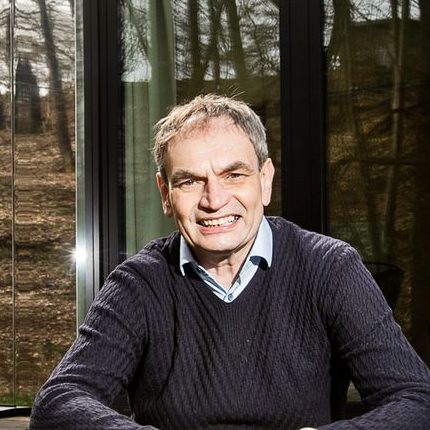
How does the human mind recognise faces, understand speech and comprehend other people? The concept of mental modules posits that some of these abilities are based on specialised mechanisms. This lecture will introduce the idea of modularity of the mind and explain why evolutionary psychologists use this concept when investigating the origins of human thought. Using well-known examples, it will demonstrate the appeal of this approach as well as the difficulties involved in testing it. It will also focus on how learning, culture and the interaction of brain systems contribute to cognitive specialisation. It will thus offer an accessible introduction to the ongoing debate on how evolution has shaped our minds.
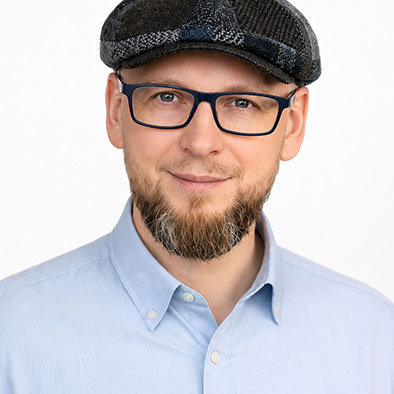
Chatbots, autonomous systems, robotics, data analysis and automation. The range of applications for artificial intelligence is growing rapidly. However, the technology itself does not necessarily bring about real change. That change comes when we are able to integrate it meaningfully with people, other technologies and processes, and create a functional whole from the individual parts.
What if the greatest strength of AI isn’t in AI itself?Jan Vlk will explore AI from the perspective of modularity and integration. Why don’t we need to develop everything from scratch? How can we combine existing technologies to create solutions for specific needs? And what happens when artificial intelligence moves from screens into the physical world via robotics and autonomous systems? Using the example of the Czech humanoid robot, he will demonstrate why the greatest opportunity may lie not in developing the technology itself, but in its clever integration and application.
What if the greatest strength of AI isn’t in AI itself?This talk will explore AI as a building block of capabilities, whose true power lies not in a single perfect tool, but in how well we can integrate the individual components.
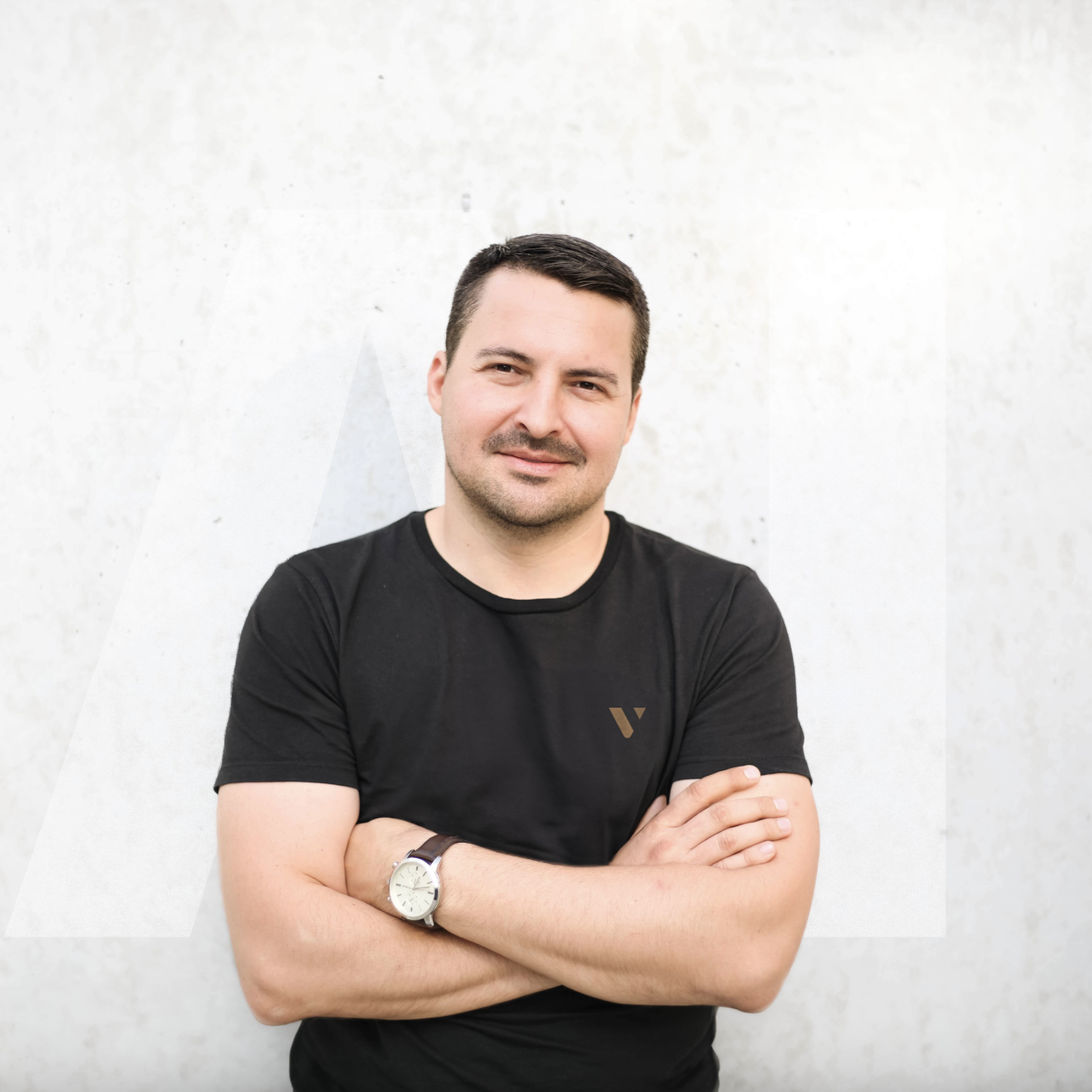
How has modular construction changed over the last forty years – and why is it approached differently in different countries? Harry van Zandwijk has spent most of his professional career at the helm of the Dutch company Jan Snel, which he helped transform from a family business into one of Europe’s leading players in modular construction. In his presentation, he will offer an insight into the development of modularity in the Netherlands, Germany and the UK, and demonstrate how differently individual markets approach the speed of construction, standardisation, quality and the long-term use of modular buildings. He will also share how perceptions of modularity have changed over the course of his career and how he himself has approached the modular system – from individual buildings to industrialised, large-scale construction.
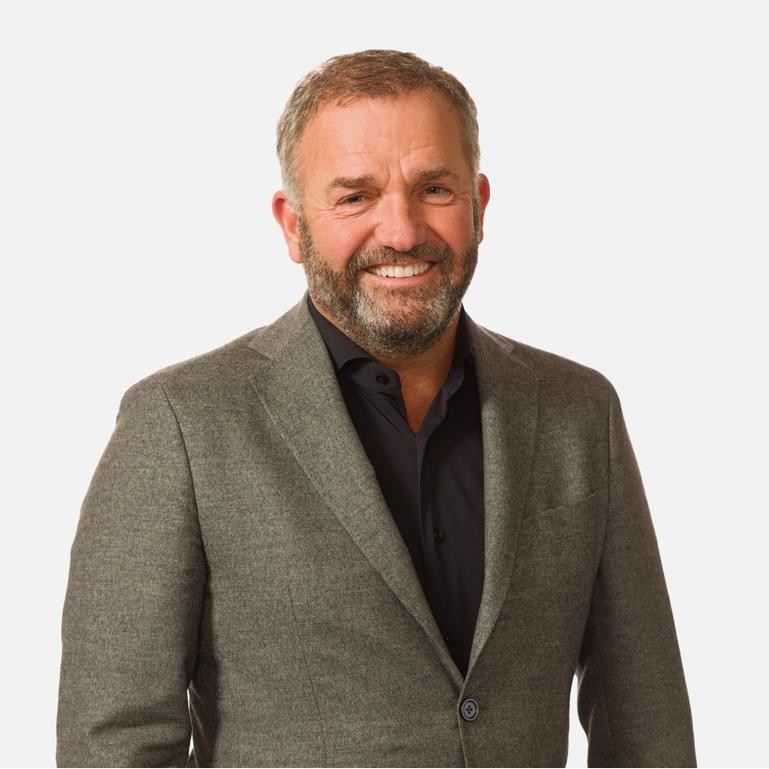
When the flood left the children in Česká Ves without a school, it seemed that a return to normal lessons would be a long-term endeavour. However, thanks to swift decision-making, determination and cooperation, a fully-fledged temporary school for 200 children was built in just five weeks. Filip Worm, headteacher of Česká Ves Primary School, and Petr Mudra, the village mayor, will take you through the story of how it came about – from the first days after the flood, through the planning and construction, to everyday life in the modular school. They will show what can be achieved when people come together and seek solutions even in difficult circumstances.
The world is changing faster than we can prepare people for it. The purpose of education, therefore, can no longer be to equip a child with a fixed set of knowledge once and for all. Children need to learn to adapt themselves continuously: to learn, to understand themselves and the world, to collaborate, to make decisions and to act in the face of uncertainty.
A traditional school divides education into around fourteen subjects. At ScioSchools, instead of these, we work with eight ScioGoals, which we see as fundamental building blocks for life in a changing world.

School is just one of the many modules that teach us throughout our lives. What exactly makes up our own educational ecosystem? What roles do people, experiences, books, technology, work, interests, mistakes or even chance play within it?
In this workshop, we will explore how our learning modules change, expand, interconnect or, conversely, disappear over the course of our lives. We will examine how individual modules function both independently and collectively, and what emerges precisely from their interconnection – that is, their connectivity.
Let’s also try, for a moment, to challenge the notion of school as the primary and most important source of education, and look at learning as a lifelong process that takes place in many different settings and in various ways.
And finally, everyone will try to identify their own learning objectives: what I’ve already achieved, what I’m currently working on, and what module might be missing from my learning ecosystem.
Conference participants will have the opportunity to build their own ‘modular AI’. Through a quick vote, they will decide on its name, personality, communication style and other characteristics. The individual parameters will become virtual modules, which will gradually come together to form its final form.
But that is just the start of the experiment. The AI will be given access to the conference programme, presentations and information about the individual speakers, and will gather further context throughout the day. At the end, it will itself become part of the programme: it will summarise the conference from its own perspective, explain what caught its attention, and ask questions of selected speakers.
Jan Tyl will thus work with the participants to create a live experiment, through which he will demonstrate that modularity need not be confined to the world of construction. In the same way, we can assemble technologies, systems – and perhaps even artificial intelligence personalities themselves.
Share an idea. Present your project. Ask a question that’s been on your mind. Respond to what’s been discussed today. Inspire others. Or just tell a good joke.
Three minutes. One stage. No long presentations.
What you do with them is up to you.
Speakers ...
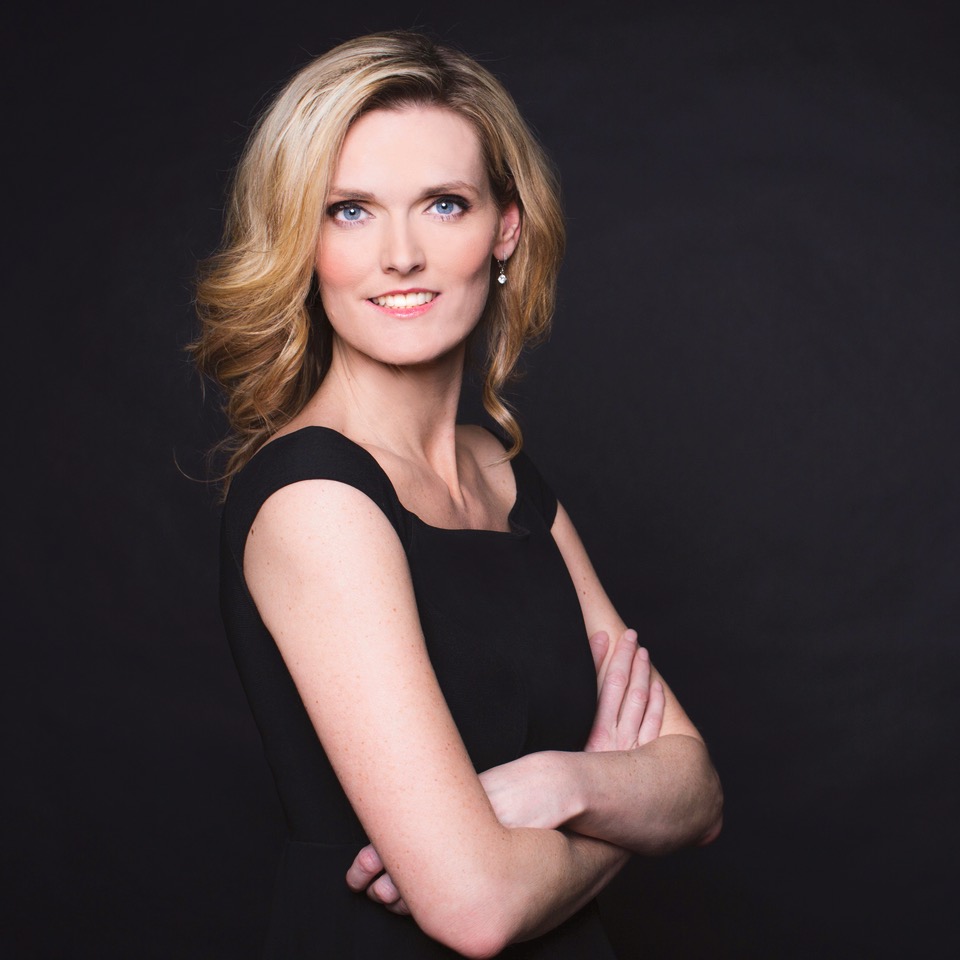
Martin Paleček
Associate Professor of Philosophy at University of Hradec Králové
Jan Kopecký
Teacher at Scio School Zlín
Harry van Zandwijk
Former CEO Jan Snel (later Daiwa House)